A NXT HIVE product · Early access open
Forage Recruit: hiring, engineered.
Your entire hiring pipeline — from job posting to org chart — running on one system. AI ranks your candidates and shows its reasoning. Everything else is engineered to just work.
Built for startups and growing companies where hiring is someone's second job. Not another tracker. Not another AI wrapper. A system that carries your hiring end to end.
The problem
Two bad options.
The tracker. It gives you columns, tags, and a place to dump resumes. Then leaves you to do all the actual work: reading applications, writing scheduling emails for the fourth time today, remembering who needs a reply, chasing offer acceptance. The tracker stores your hiring. It doesn't do your hiring.
The AI layer. It routes every resume through a language model and charges you per screen, per role, per candidate. Your bill moves when model prices move. The reasoning is a black box. And your applicants' resumes, contact details, and work history take a trip through somebody else's infrastructure to make the product work.
A five-person team either does the work by hand, or pays model rates for a process that was never an AI problem to begin with.
The answer
Engineer the pipeline. Rank with intelligence.
Look at hiring closely and it splits in two.
95% follows rules. An application arrives and must be logged. A resume must be checked against the role requirements. A candidate moving stages must be notified. Interviews must be scheduled against real calendar availability. An offer must be generated from an approved template, sent, and tracked. Onboarding documents must be requested and verified. This is machinery — and machinery should be built, not prompted. In Forage Recruit, every one of these steps runs on a deterministic engine: the same way, every time, at a cost that doesn't move when model prices do.
5% genuinely benefits from intelligence: reading a resume against a specific role and ranking one candidate above another with reasons attached. That is where — and only where — Forage Recruit applies AI.
A pipeline that keeps running no matter what happens to models or their pricing, and an intelligence layer you can actually interrogate.
How it works
Six stages, start to finish.
From setting the process up to the day your new hire appears in the org chart. Every stage carried by the system. The decisions stay yours.
STAGE 01
Configure
You define the process. The system enforces it.
Create your workspace, set up your team, and define who does what. Design your hiring journey: interview stages, their order, time gaps between them, and skip-conditions that let senior or referred candidates move faster without manual intervention every time.
Connect your tools — Google, Microsoft, or Zoho calendars, plus your hiring inbox — so scheduling and communication happen inside the system, not across browser tabs.
Modules: Sign up & org creation · Process pipeline · Integrations · Org settings
STAGE 02
Intake
Applications don't pile up. They get processed.
Every application is processed the moment it arrives: parsed, checked against hard requirements, and ranked with visible reasoning. Not a black-box score — a clear explanation of why each candidate sits where they do.
You review an ordered shortlist instead of a folder of PDFs. Shortlist or reject with one click each. The AI narrows the pile. The call stays yours. Nothing is auto-rejected on a score.
Modules: AI screening · Candidate database · Job listings · Careers portal
STAGE 03
Schedule
The scheduling nobody wants to do, done by the engine.
Shortlisted candidates need interviewers and time slots. Forage Recruit assigns both — manually when you want control, automatically when you don't. Interviewers sync their own calendars and manage their own availability, so the system books against the truth, not a stale guess.
Each interviewer gets their own workspace: pending requests they accept or decline with a reason, and a clean line-up of everything they've accepted. No group threads. No “does 3pm work for everyone?”
Modules: Scheduling · Calendar & availability · Requests & line-up · Walk-in drives
STAGE 04
Decide
One outcome. The system does the rest.
After an interview, the interviewer records the result: Pass, Fail (with reason), or Another Chance. A pass advances the candidate automatically. A fail archives them with a record. Another Chance keeps them in the same round for a re-interview.
We deliberately did not automate this stage. Deciding who to advance involves judgment and accountability that belong to a person. The decision stays human; only the consequences are automatic.
Modules: Decisions
STAGE 05
Offer
From approved template to tracked acceptance.
Build offer-letter templates in a familiar editor. Fixed content stays locked; variable fields fill from the candidate's record. Every template passes an approver before it can be used — a deliberate gate, not an afterthought.
Generate the letter, preview it with real data, send it, and track acceptance or rejection in one place. When all openings are filled, the system holds remaining candidates automatically and reopens if someone declines.
Modules: Template builder · Approval gate · Offer letter
STAGE 06
Onboard
Accepted becomes employed, without the chase.
Forage Recruit requests documents, captures what comes back, and lets recruiters verify each file before employment is final. Optional background verification can be toggled per process.
Verified hires flow into your live organization directory and take their place in an org tree that tracks reporting lines, locations, and work mode (remote, hybrid, or onsite). The person you hired appears in the company structure the moment they are confirmed.
Modules: Onboarding · BGV · Internal: Organization tree
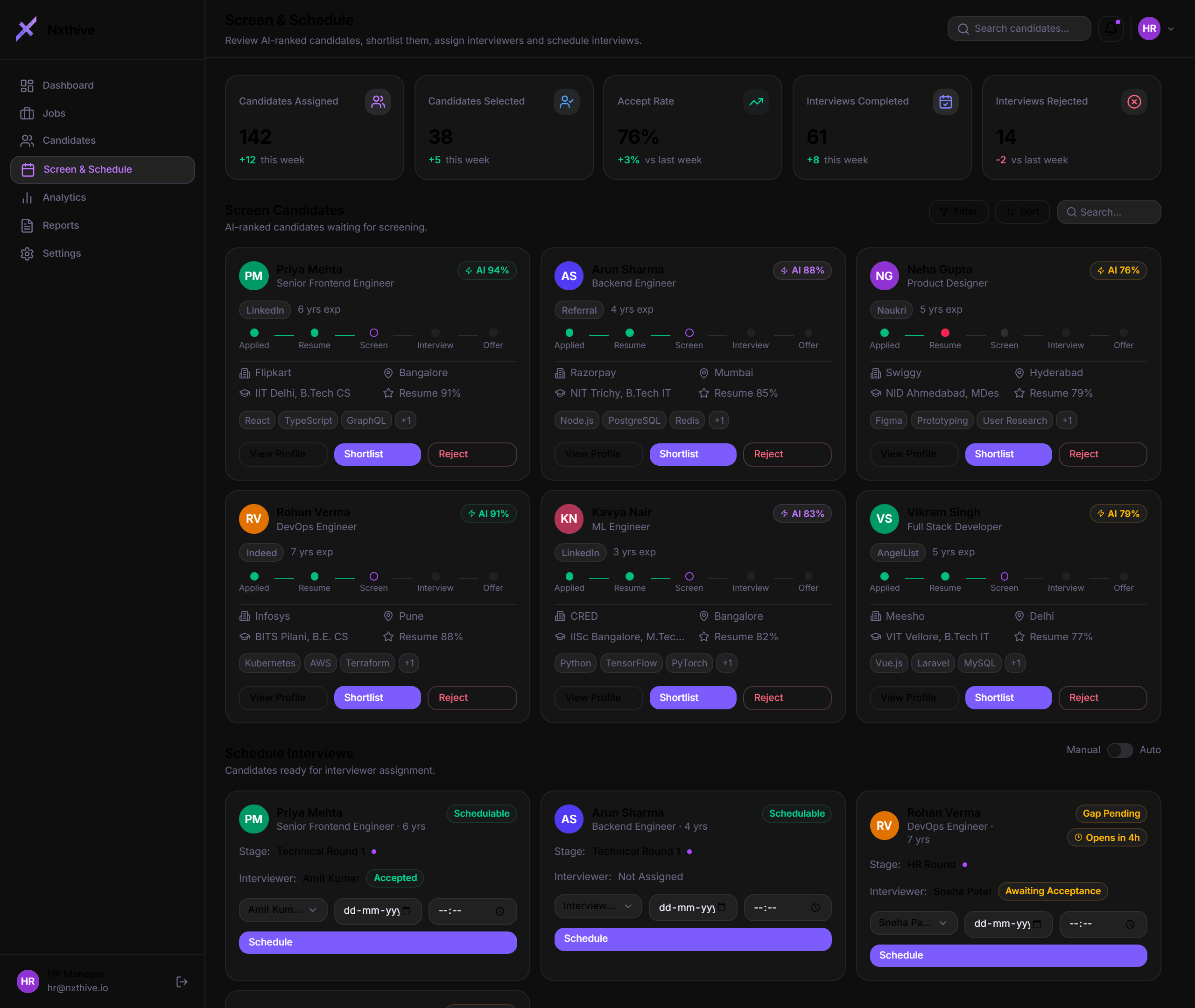
How we use AI
AI in Forage Recruit does one job.
It ranks candidates against a specific role and shows its reasoning in plain language. You can read why a candidate placed where they did. You can disagree and move them yourself. Nothing is auto-rejected.
The screening funnel
- 01ParseResume text is extracted and structured — name, experience, skills, education. No AI needed; deterministic extraction.
- 02Hard rulesKnock-out requirements are checked automatically. Candidates who don't meet them are flagged, not hidden — you can still see and override.
- 03Code signalFor technical roles, public GitHub profiles are checked. A candidate without a public profile is not penalised; they rank lower on that signal but stay fully visible.
- 04AI rankingCandidates who pass the rules are ranked against a per-role scorecard. The same candidate can rank differently for a backend role than a frontend one.
- 05Visible reasoningEvery ranking carries a plain-language explanation — which skills matched, what experience was relevant, and why one candidate placed above another.
Each candidate is scored once per job against a fixed scorecard. The score doesn't change unless the job requirements change. Your shortlist is stable and auditable.
Engineering-first is a data decision. This product holds resumes, contact details, and work histories — other people's personal data, trusted to you. The pipeline and the data inside it stay in the system. Intelligence touches only what it needs to.
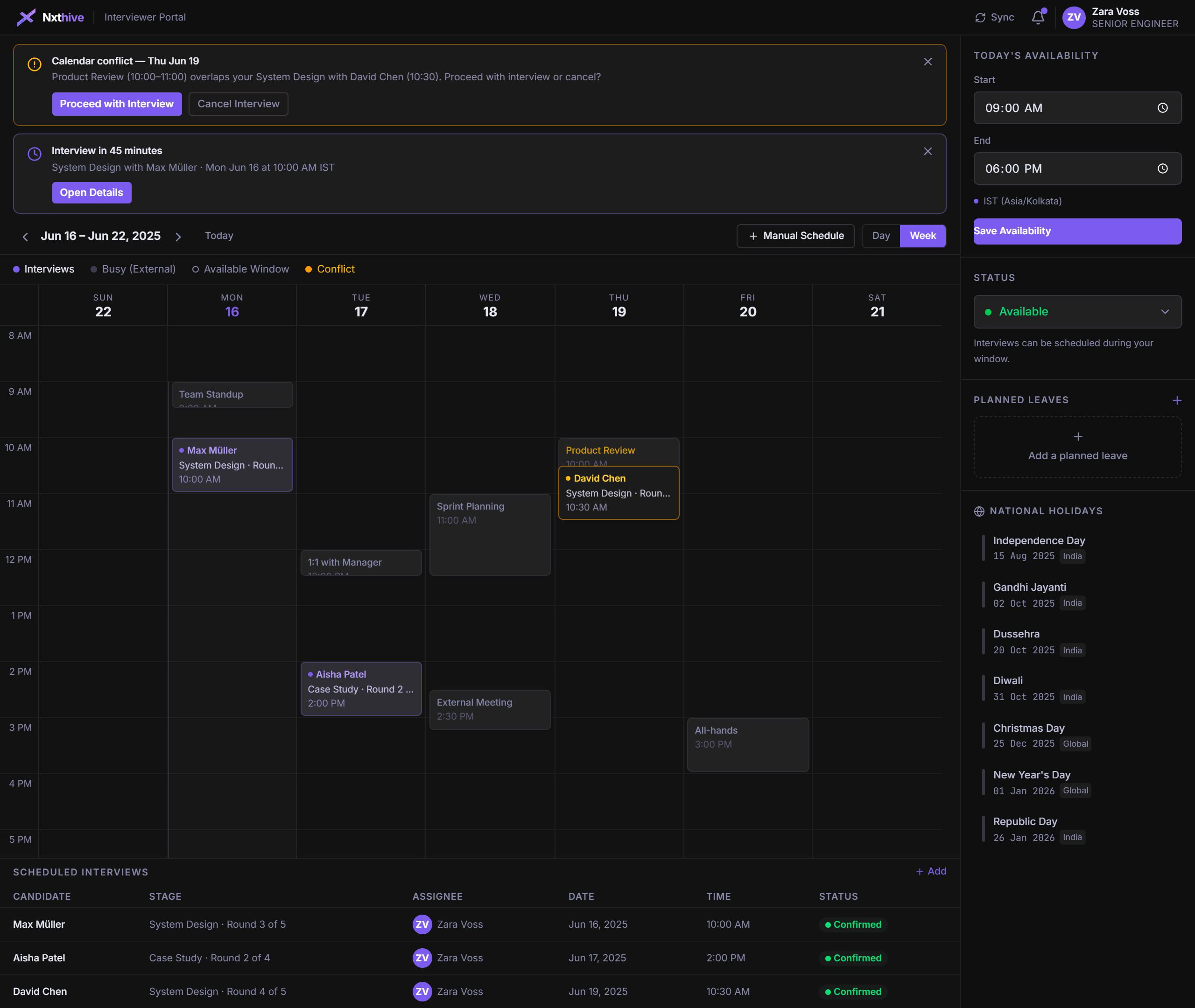
Who it's for
Hiring is someone's second job.
Forage Recruit is built for startups and growing companies (5–500 people) where recruitment is someone's second job: a founder, an ops lead, a one-person HR function running several roles at once.
You are our customer if:
- You handle hiring alongside your actual job
- You have 1–20 open roles at any time
- You get 50–500+ applications per role and don't have time to read them all
- You've outgrown spreadsheets and email but don't need an enterprise ATS
- You want a system that runs the process, not just stores it
You are not our customer if you have a 12-person talent-acquisition team with a dedicated stack and staff to run it. We're not built for enterprise TA departments.
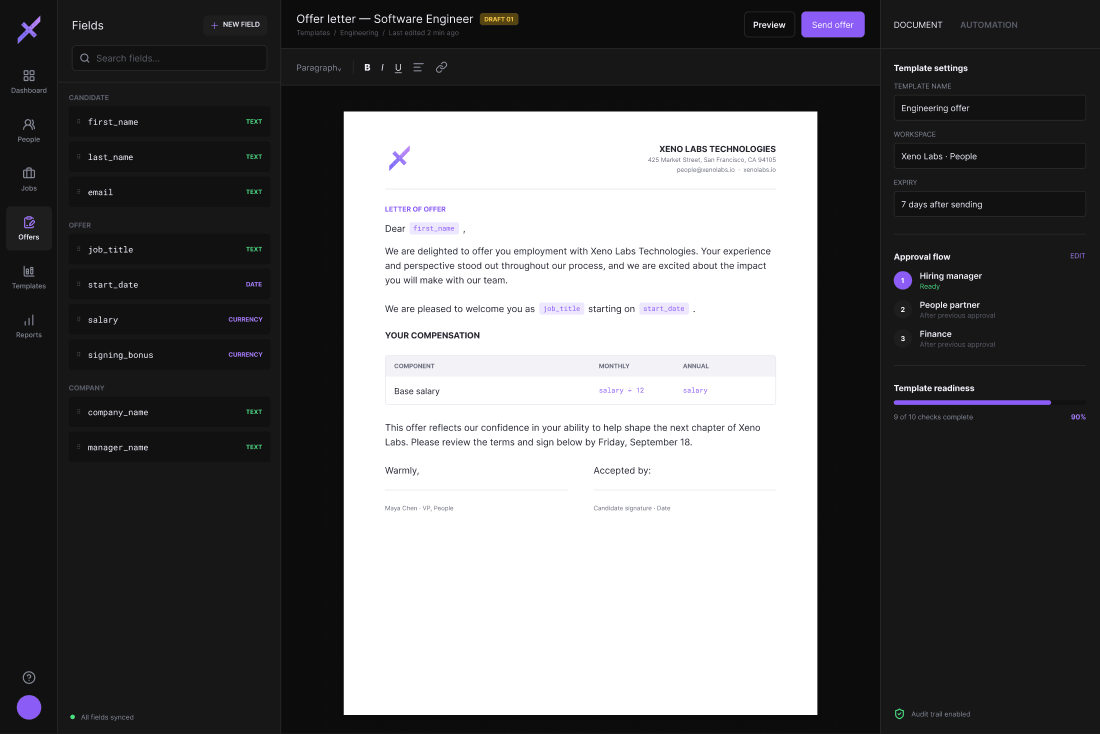
Not sure it fits your hiring?
Ask an AI instead of reading another page of ours. We've written the question — it opens in your assistant with links to this site and a summary of how Forage Recruit works, then asks about your hiring before telling you whether we are a fit.
Opens in your own account. We don't see the conversation, and nothing is sent to us.
Early access is open.
Tell us one role you are hiring for and we will set it up with you.